Formosan, Drywood, or Subterranean Termites? A Northeast Florida Homeowner’s Guide
Northeast Florida homes can be affected by drywood termites, native subterranean termites, and Formosan subterranean termites. These termites do not live, travel, or damage a home in exactly the same way. Drywood termites live inside the wood they infest, while subterranean termites usually maintain colonies in soil and travel to a structure through protected routes such as mud tubes. Formosan termites are an invasive and particularly destructive type of subterranean termite.
Correct identification matters because there is no single termite treatment that is appropriate for every infestation. A treatment intended for termites living in soil may not eliminate a drywood colony sealed inside an attic beam. Likewise, treating one piece of wood may not protect a house from a subterranean colony foraging beneath the foundation.
If you find discarded wings, mud tubes, unexplained wood damage, or piles of hard sand-like pellets, avoid disturbing the evidence. Photograph what you see, collect several insects or wings if possible, and arrange a professional termite inspection.
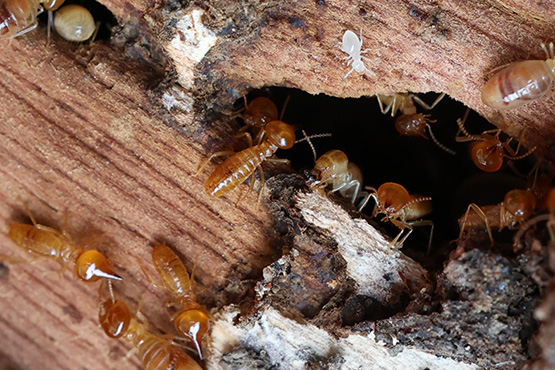
Formosan Termites
Formosan termites are a species of invasive subterranean termite known for large colonies, extensive foraging, and the ability to establish aboveground nests when a structure supplies wood, moisture, and darkness.
A Formosan-oriented inspection may pay attention to trees, roof framing, plumbing areas, wall voids, attic moisture, and other possible carton-nest locations in addition to the soil and foundation. Formosan subterranean termites have spread through many of Florida’s major cities, including Jacksonville, and are reported most often in urban and coastal areas. They typically swarm on humid evenings from April through July and are strongly attracted to outdoor and indoor lights. A few swarmers that flew through an open door do not prove the structure contains a colony. By contrast, hundreds or thousands emerging from a wall, ceiling, window frame, or attic opening strongly suggest an active infestation.
Inspectors may look for:
- Large or numerous mud tubes
- Carton-like nest material inside walls, trees, or attics
- Moisture from roof leaks, plumbing, condensation, or poor drainage
- Damage in roof framing or other areas not directly connected to the soil
- Infested trees close to the structure
Drywood Termites
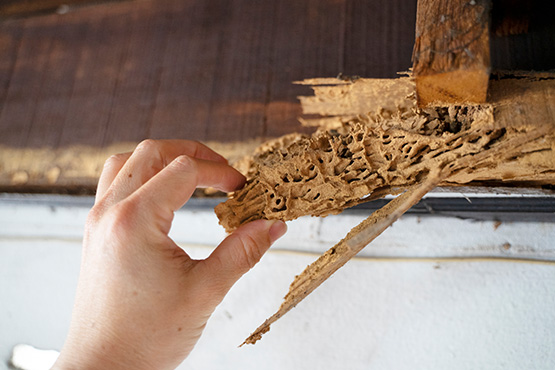
Drywood termites establish colonies directly inside wood and do not need to travel back to the soil. They may enter through eaves, fascia, soffits, attic framing, window or door frames, exterior wood, or cracks and joints in exposed lumber. A colony can also arrive inside infested furniture, cabinets, flooring, or other wooden items.
The most recognizable drywood-termite sign is frass: hard, dry, six-sided fecal pellets. As the termites feed on wood, they push these droppings out of kick-out holes in their tunnels.
Frass pellets often collect on windowsills, floors, furniture surfaces, insulation, or beneath a ceiling beam, and mirror sand or sawdust in appearance. Sweeping the pile away does not solve the infestation; a new pile in the same place indicates that termites may still be active above it.
Other warning signs include:
- Discarded wings near windows, attic vents, eaves, or light fixtures
- Small kickout holes in wood
- Hollow trim, fascia, framing, doors, or furniture
- Evening swarms during late spring or early summer
Because a drywood colony can remain inside one piece of wood, a small accessible infestation may sometimes be addressed by removing or treating that wood. But finding one colony does not establish that it is the only colony. Pellets in multiple rooms, inaccessible activity, or evidence across separate structural areas may lead a professional to recommend whole-structure treatment.
Native Subterranean Termites
Native subterranean termites are widely distributed in Florida. The eastern subterranean termite and dark southern subterranean termite occur statewide, while the light southeastern subterranean termite is reported less often in structures.
These termites live and forage in soil. They enter buildings through foundation cracks, expansion joints, plumbing openings, hollow block, crawl-space supports, or wood that touches the ground. When exposed travel would cause them to dry out, workers construct shelter tubes from soil, partially digested wood, and other material.
Common warning signs include:
- Mud or shelter tubes on foundation walls, piers, slabs, garage edges, or crawl-space supports
- Soil packed into cracks, joints, or damaged wood
- Wood that sounds hollow, appears blistered, or breaks open
- Winged termites emerging indoors or large numbers of discarded wings
- Persistent moisture, leaks, or wood-to-soil contact near the affected area
Native subterranean termites feed year-round in Florida, even though homeowners notice them most often during seasonal swarms.
Termite Identification Table
| Termite Type | Frass Presence | Mud Tubes | Swarm Behavior |
|---|---|---|---|
| Formosan Termites | No frass or pellets. | Mud tubes are common. | Swarmers commonly fly on humid evenings from April through July. |
| Drywood Termites | Frass is common. Pellet color can vary. | Mud tubes are not common. | Swarmers are active during evenings in late spring or early summer. |
| Native Subterranean Termites | No frass or pellets. | Mud tubes are common. | Native subterranean termites may swarm from winter through late spring. |
How Northeast Florida Homeowners Can Reduce Termite Risk
No maintenance step can guarantee that termites will never reach a house, but these measures make a property less attractive and easier to inspect:
Correct Leaks
Moisture is one of the most important conditions affecting subterranean-termite activity. A slow plumbing leak, overflowing gutter, roof leak, sprinkler aimed at an exterior wall, or air-conditioning condensate line draining beside the foundation can keep wood and soil damp enough to support termite foraging. Formosan termites may also establish an aboveground carton nest when a wall, attic, or roof void provides wood, continuing moisture, and shelter.
Repair leaks promptly rather than waiting for visible wood decay. After the repair, allow affected materials to dry and have softened, stained, or damaged wood evaluated. Gutters and downspouts should carry water away from the building, irrigation heads should face away from exterior walls, and condensate discharge should not create a consistently wet area beside the foundation.
Avoid Piling Mulch or Dense Vegetation Against Walls
Mulch does not automatically cause a termite infestation, but deep mulch and dense plant growth can retain moisture and hide the foundation line where mud tubes would otherwise be visible. Vegetation touching the house can also reduce airflow and make routine inspection more difficult.
Keep mulch below the bottom edge of siding and maintain a visible inspection space along the foundation wherever the home’s construction allows. Position shrubs far enough from the wall to accommodate future growth, and prune existing plants so an inspector can see and reach the exterior surface. Avoid burying siding, stucco edges, weep holes, or previously treated soil beneath new landscape material.
Keep Soffits and Attic Vents in Good Repair
Damaged soffits, fascia, roof joints, and attic screens can provide access to drywood-termite swarmers searching for a place to establish a colony.
Replace rotted or damaged wood, repair loose panels, and maintain properly fitted screening over vents without blocking necessary ventilation. During routine maintenance, look for discarded wings, pellet piles, small kickout holes, water stains, and wood that appears blistered or hollow. Evidence in an attic or along the roofline warrants a professional inspection because the full extent of activity may be difficult to see from below.
Trim Branches Away From Walls and The Roof
Branches resting against a roof or exterior wall can damage shingles, gutters, fascia, and paint while keeping these surfaces shaded and damp. They can also create concealed routes between an infested tree and the structure.
Maintain separation between trees, shrubs, and the building, accounting for movement during wind and future plant growth.
Inspect Wooden Furniture and Salvaged Lumber Before Bringing Them Indoors
Drywood termites can be transported inside an established colony hidden within furniture, cabinets, hardwood flooring, decorative wood, or salvaged lumber.
Before moving a wooden item into the home, inspect joints, undersides, backs, unfinished edges, cracks, and old repair areas. Look for six-sided pellets, small kickout holes, discarded wings, hollow-sounding sections, or patched surfaces that could conceal previous activity. Keep a questionable item isolated from the house until a pest professional can examine it; moving or refinishing it without inspection can spread evidence and make the infestation harder to locate.
Schedule Periodic Professional Termite Inspections
Termites can remain active behind walls, beneath slabs, in crawl spaces, inside attic framing, or within individual wooden items long before obvious damage appears. Periodic inspection helps identify new activity, moisture problems, hidden access routes, and changes that may affect an existing treatment. Homes with previous termite activity should retain inspection reports, treatment diagrams, contracts, renewal records, and repair documentation for future owners and inspectors.
Frequently Asked Questions
No. Drywood termites live sealed inside wood and may require localized wood treatment, removal, structural heat treatment, or structural termite fumigation. Subterranean colonies forage through soil and require a treatment directed at soil-based access, such as liquid termiticide or a monitored bait system. An incorrect treatment can leave the actual colony untouched.
Piles of hard, brown, six-sided pellets are strongly indicative of drywood termites, but identification should still be confirmed.
Mud tubes are strong evidence of subterranean-termite activity. A professional can open and evaluate selected sections, look for live insects, and inspect for additional tubes or damage.
No. An outdoor swarm shows that a mature colony exists in the surrounding area. Termites emerging from an interior wall, ceiling, baseboard, or window frame are more likely to indicate activity in the home.
A wood-destroying organisms inspection, commonly called a WDO inspection, is a specialized inspection for evidence of termites and other organisms that damage wood. It is not automatically included in a standard home inspection.
Whether a WDO report is required depends on the purchase contract, lender, loan program, insurer, and facts of the property. Even when no outside party requires it, a WDO inspection is an important risk-management step for a Northeast Florida buyer because termite activity can remain hidden behind finished surfaces and termite damage is generally excluded from homeowners insurance. It can help a buyer decide whether to seek:
- Species confirmation
- A termite-treatment proposal
- A contractor or engineer’s assessment of structural damage
- Repair records or previous treatment documents
- Clarification of an existing termite warranty and whether it transfers
No, DIY termite treatment methods typically only kill termites that are directly contacted, rather than resolving the root source of the problem: the colony. It is strongly recommended for homeowners to hire a licensed pest management company for termite treatment and extermination.